
Typesetters proofing copy in The Composing Room, Inc. ca. 1964
photo Victor Laredo
The Composing Room
Robert Leslie and Sol Cantor met around 1920 when Leslie was working at McGraw-Hill as an industrial doctor for the plant. Not having enough to do, he often went upstairs to visit the Carey Printing company. Over time, he ended up being a proofreader for the firm and met Sol Cantor who was in-charge of their Linotype machines. Leslie and Cantor hit it off and decided to form their own company - Enmor Linotype Services. Leslie bought out former partners of Cantor's with the help of money from Dr. Sarah's relatives.
They worked with the Carey Printing company to help groom their composers on Linotype and acted as a showroom for the Merganthaler Linotype company. Its most likely that this is how Leslie met Paul Bennett and became involved with the group that would eventually become Typophiles.
Cantor and Leslie grew the firm up to 13 machines but eventually the president of Carey printing backed out of their arrangement (he was paying their payroll.) They sold the firm to Louis Statenstein of the American Book-Stratford Press and Leslie stayed on to help train Statenstein's sons but to also work in sales and design.
Meanwhile, in 1927 Leslie became a silent partner in Cantor's new venture, The Composing Room, Inc. In 1931, when Leslie's contract with Statenstein was up, he joined Cantor publicly as a partner and head of sales.
Cantor and Leslie's partnership would last until Cantor's death in 1965. During their time together, they would focus on becoming the top tier typesetting firm for advertising and then they moved on to magazines, books, promotions and all sorts of other jobs.
In the early days, they set out to be the cream of the crop in advertising typesetting. Described in a promotional piece as "a shop where type is set intelligently for intelligent clients. Also promptly, reasonably, and with true professional enthusiasm. An outfit which plays up the art in every particular, and doesn't and doesn't miss the fun in fundamentals either."
Located in the heart of New York City, it thrived on the growth of the advertising and printing industry between the wars. The Composing Room became the sponsor for a variety of intellectual and educational endeavors starting with PM and A-D magazines, graphic arts courses, the A-D Gallery, Gallery 303 and eventually the lecture series Heritage of the Graphic Arts in the 1960's.
In 1934, Leslie, created a small printer's journal. He hired Percy Seitlin as Editor and dubbed it PM magazine. Sponsored by The Composing Room, Leslie and Seitlin utilized its vast network of resources and clients. Described in the October 16, 1939, issue of Time magazine as a 'lively little publication,' PM soon grew to be a voice for a generation of artists, designers, writers, printers and graphic production people.
The significance of this firm lies in the ingenuity and driving force of Robert Leslie. His life mission, to serve, manifested itself in the education and betterment of the printing and graphic arts industry. Through Leslie, these endeavors took shape and grew to be an influential force in the history of graphic design. He was mentor to many emigre designers and gave many their first exposure to the US market.
“Way back when Doc's Gallery was probably the only place in NYC where young designers came into contact with the freshest work being done in graphics and advertising, European emigres were shown regularly. Its contribution to the graphic design community was inestimable.”
~ Gene Federico

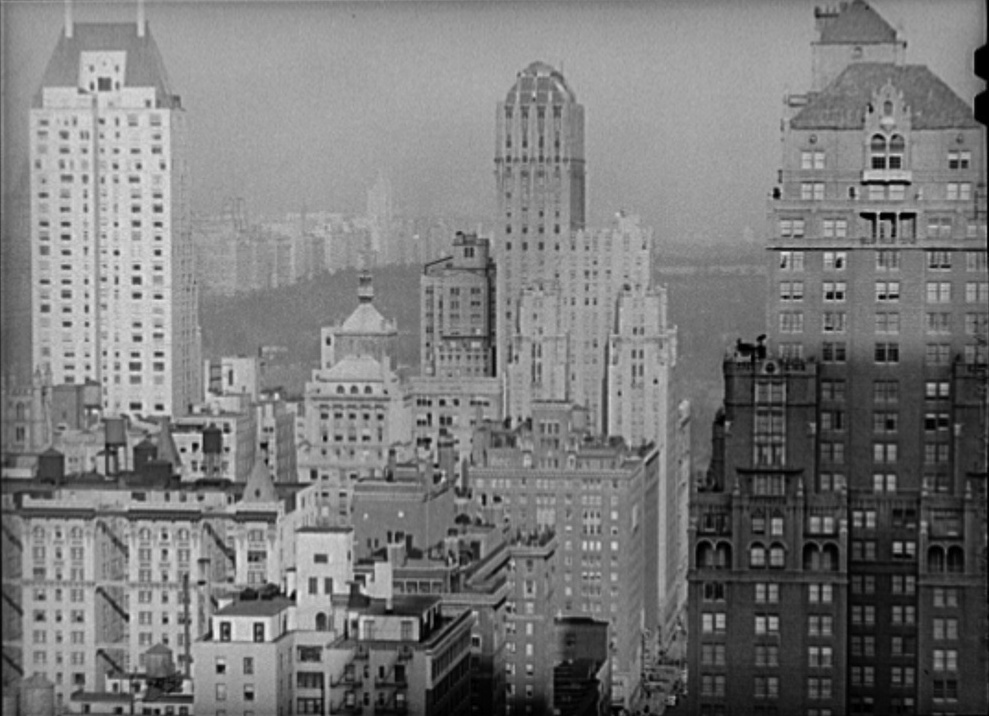
Top: Fifth Avenue approaching 47th Street, New York City
photo: Dorothea Lange
Library of Congress, Prints & Photographs Division, FSA-OWI Collection
Bottom: Midtown Manhattan
photo: Arthur Rothstein
Library of Congress, Prints & Photographs Division, FSA-OWI Collection
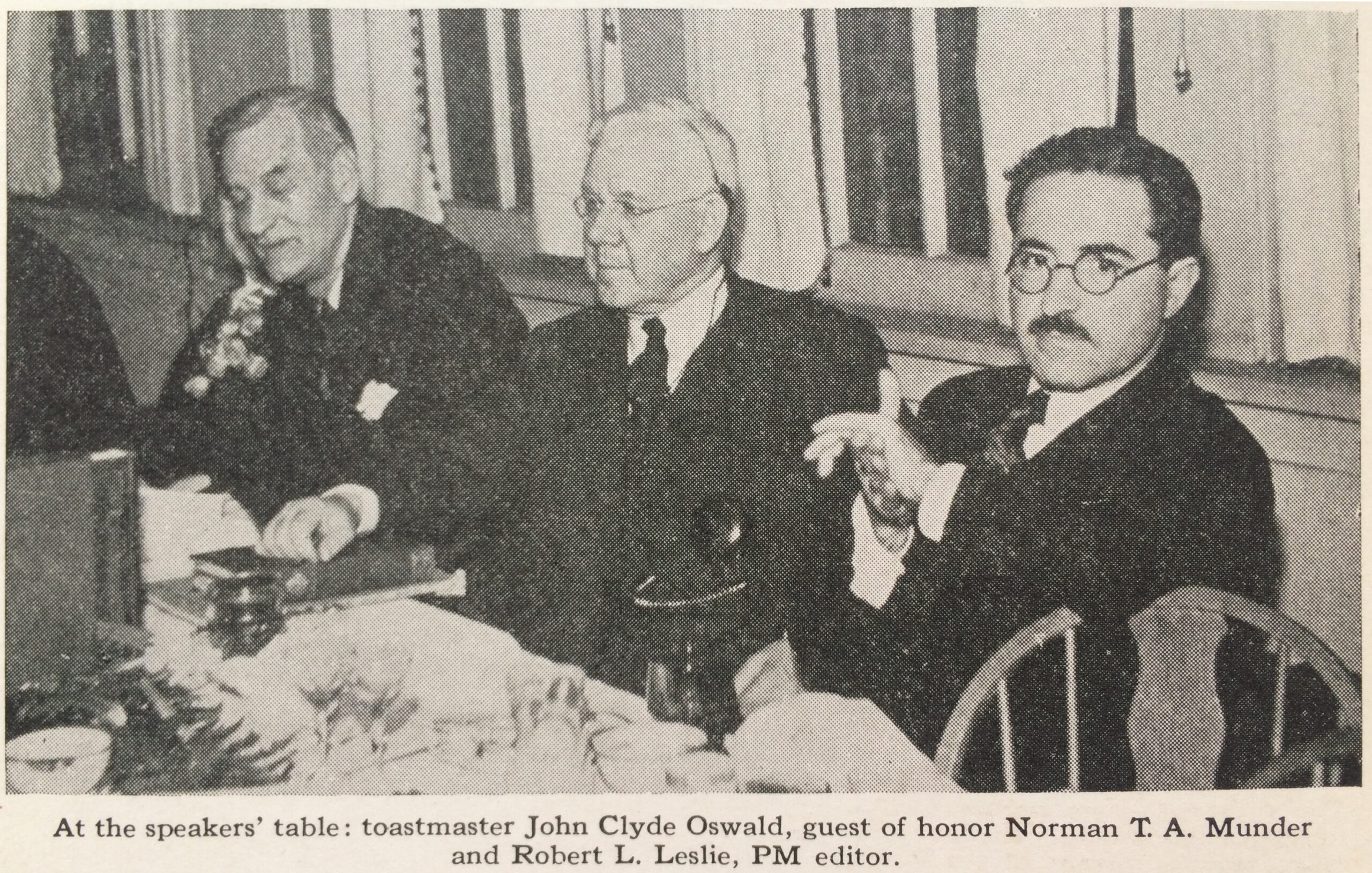
John Oswald Clyde, Norman T.A. Munder, Robert Leslie (right) at the speakers table for the 3rd Anniversary of PM Magazine.
In addition, through PM and later A-D he lifted the expectations of quality work here in the United States, as well as spreading the ideals of European modernism to a generation of designers and art directors. These many designers in turn became clients of the Composing Room, a testament to Leslie's business sense. This collection of multi-media information attempts to remind today's audience of the importance and impact to the history of graphic design one company and one man's vision can make.
Leslie was brilliant and innovative in how he handled promotion and advertising for the firm. They placed all kinds of ads in the trade press including announcements every time they released a new promotion, added a new typeface, promoted a designer or art director in PM and then AD magazine, had a gallery exhibition or sponsored lecture series at the company.
The company was in high demand and was known as the "Tiffany" of the typesetting business world. Leslie befriended and promoted the work of hundreds of designers, art directors, artists and illustrators and they in turn became clients. He was helped in his work by Hortense Mendel, originally hired to help sell type, but over time she became their publicity director.
Both Leslie and Cantor were big proponents of continued education for those involved in the graphic arts and believed that the aesthetic eye of the compositors and pressmen were as important as those of the designer and art director. They supported this philosophy through the authoring of educational articles, running workshops and teaching classes.
After WWII the firm was able to upgrade their equipment and expand and moved their offices from 325 W. 37th Street to 130 W. 46th street. And in 1959 they expaned even more - adding in a mezzanine level by lowering the 2nd floor of the building, adding a gallery, an auditoriam that held 50 people, a meeting hall, a classroom and film projection studios. They had also expanded to take up most of the 3rd floor and added storage space on the 4th floor of the building.
In 1961 they brought on Cantor's son Eli as a business analyst to work on long range plans for the firm. Sol Cantor died in 1965 and Leslie stayed on for another four years, retiring in 1969.
Back to Home | Sitemap | © 2026 Erin K Malone | Send feedback or queries to erin at emdezine.com